TWISTING
WATERS
A project about revealing the constant movement of water.In the Netherlands.
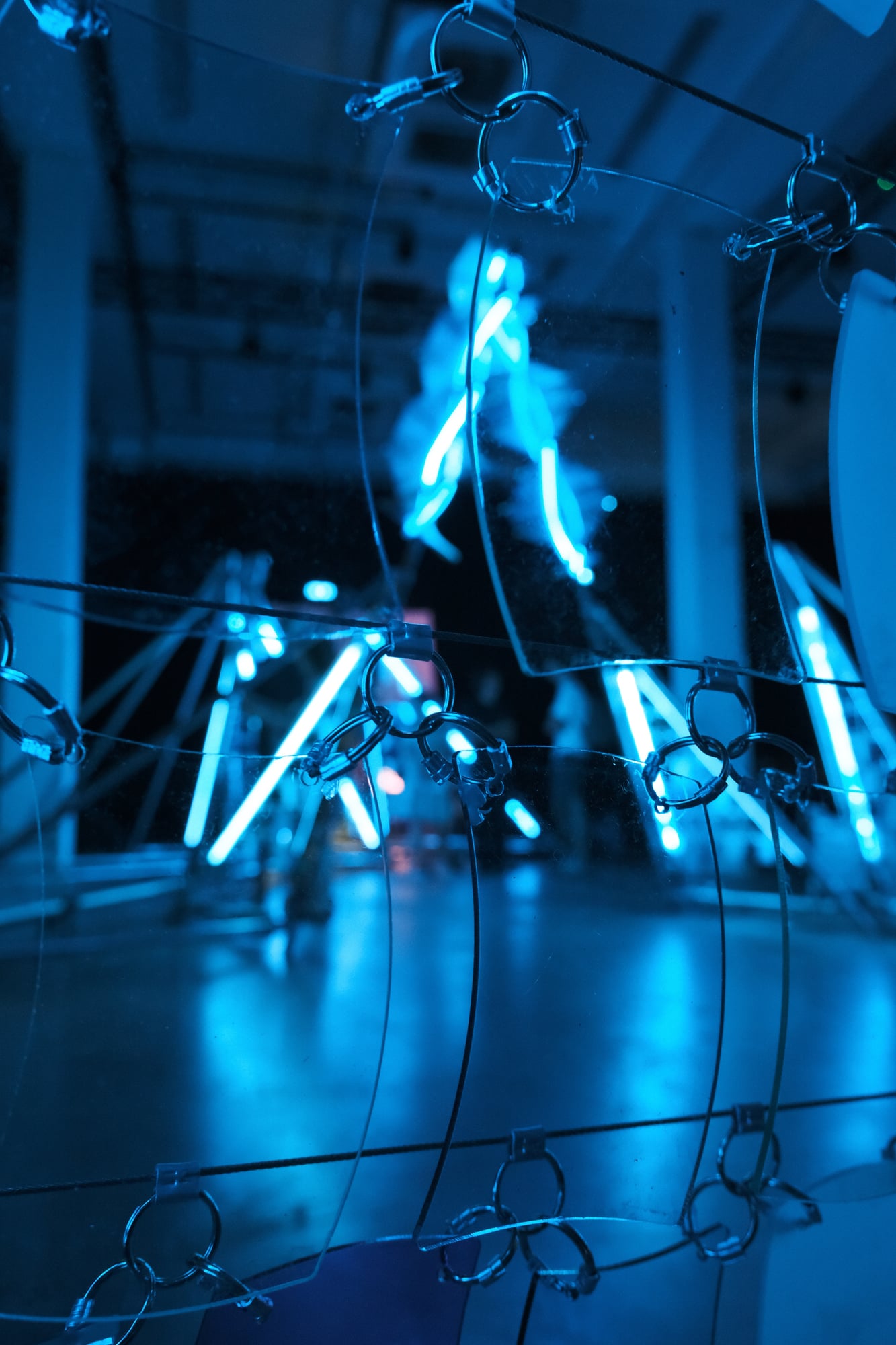
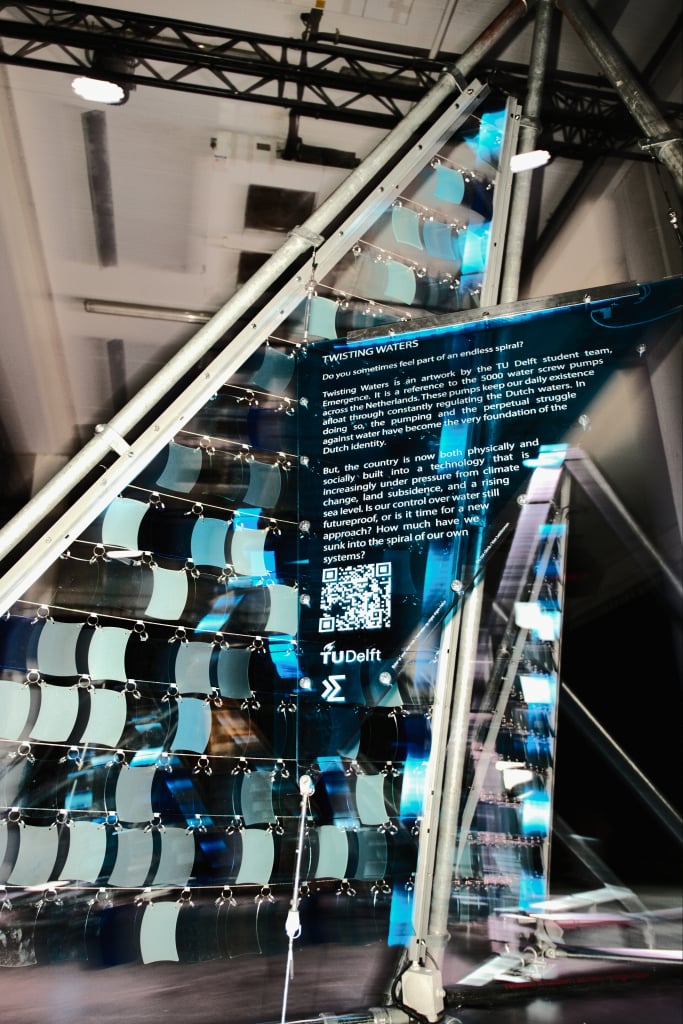
Twisting Waters reflects on the Netherlands’ dependence on water management technologies like the vijzel, which keep the land dry but also contribute to long-term environmental challenges. Building on the Studio 5 project SYNC, the installation uses two vijzels to represent the constant search for balance in water levels. Through a multisensory experience, the work invites audiences to reflect on the fragility and consequences of this deeply embedded system.
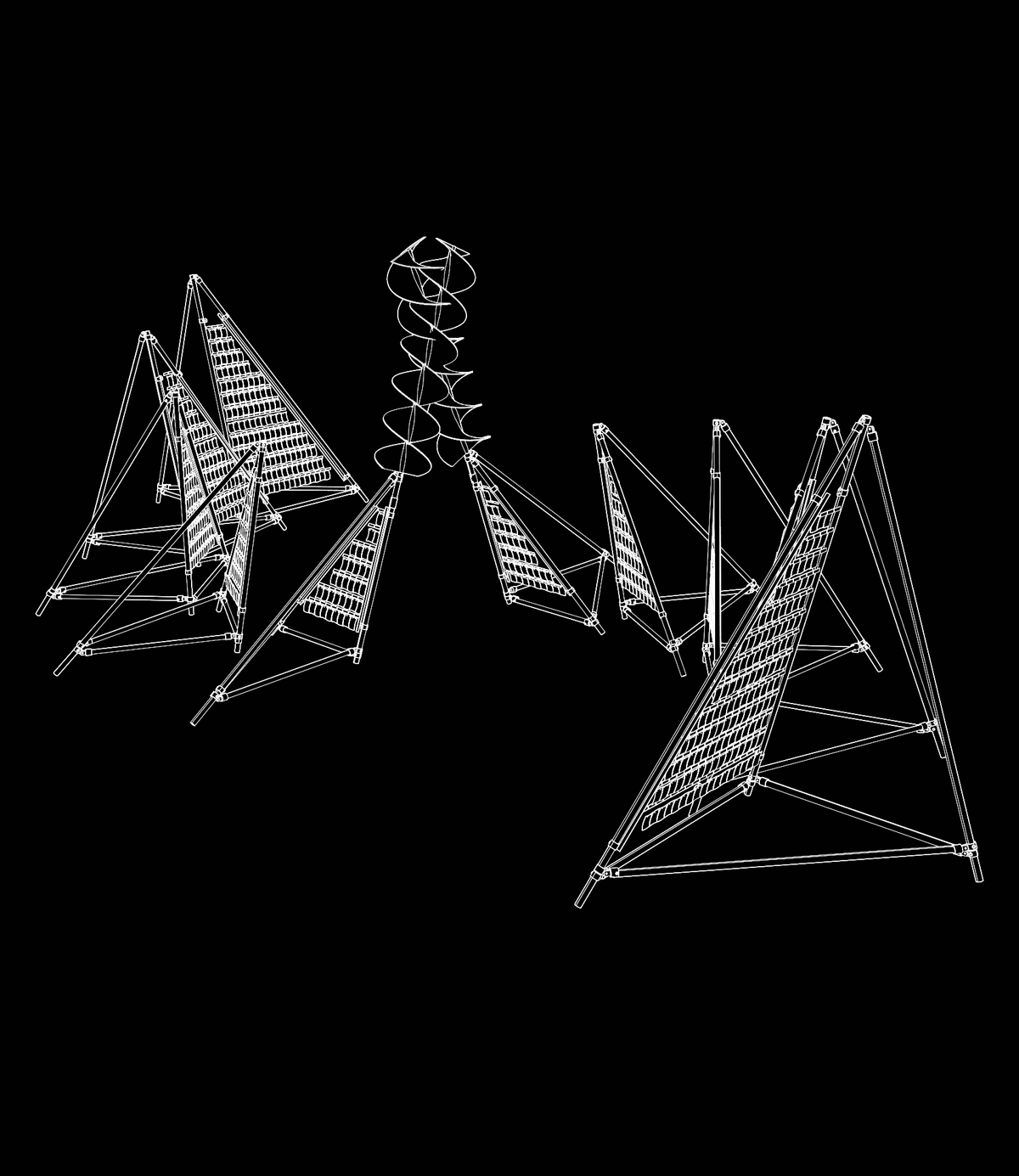
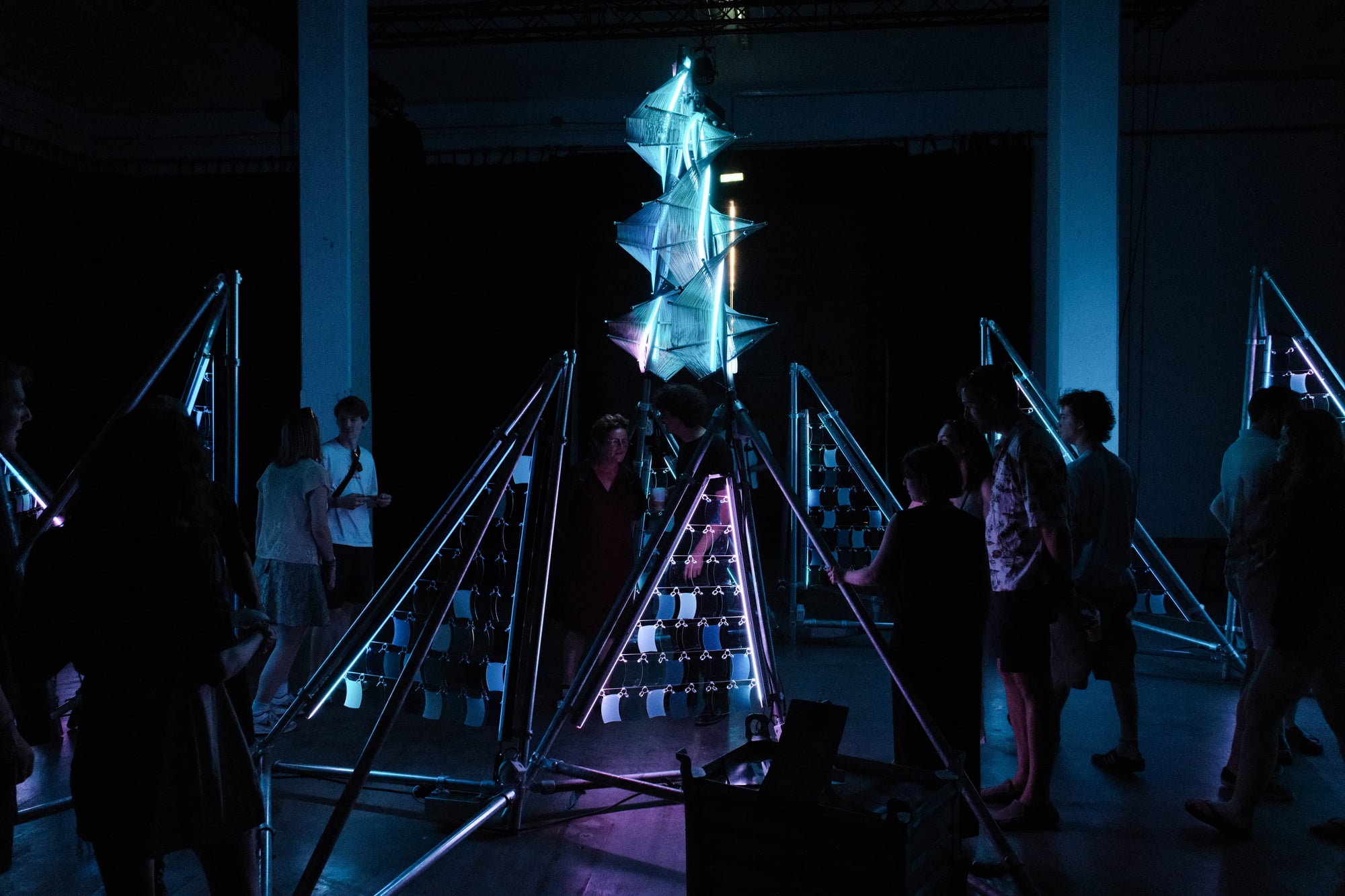
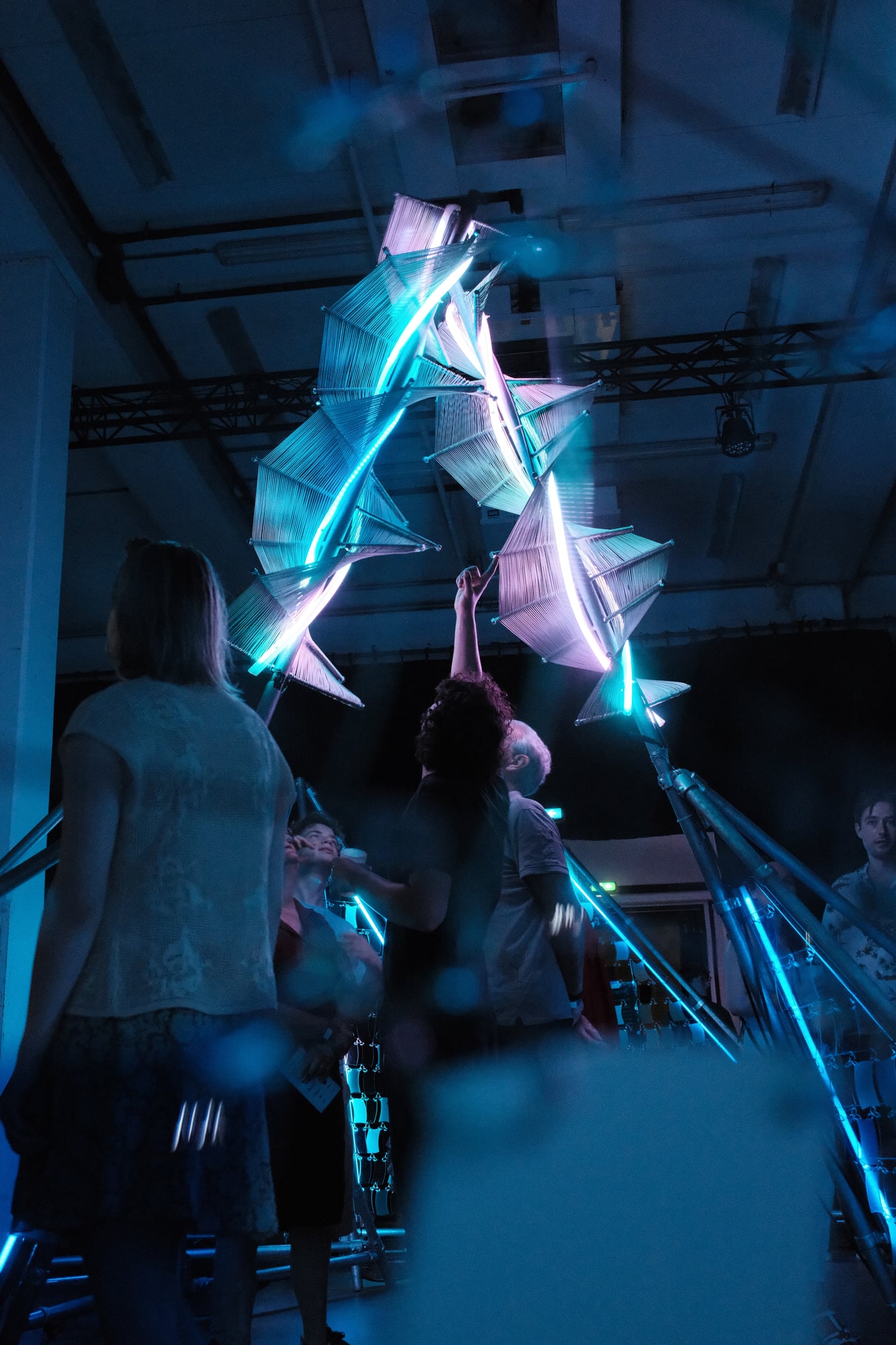
The installation is built from ten tetrahedrons that form a large spiral. At its center, two intertwined forms refer to water screw pumps, one of the oldest technologies used to move water through the Dutch landscape.
Moving light and wind-driven elements create a sense of flow. The artwork surrounds visitors and immerses them in the rhythm of water being guided, redirected, and pumped.
The two intertwined Archimedean screws at the centre symbolize how deeply dependent we have become on this system. The interlocking of the screws represent how difficult it has become to change our behaviour or break free from this dependence. Stopping or even significantly reducing our use of the system is no longer a realistic option.
What appears solid is in fact always in motion.
Sometimes we find ourselves repeating the same actions simply because they have become familiar. We continue along a path, even when we begin to wonder if another way might exist.
The Dutch relationship with water developed in a similar way. Pumps, dykes, and canals began as practical solutions for living below sea level. Over time, these systems became deeply woven into the landscape and into the way people think about water. What once felt like a choice slowly became the norm. Today, the land itself is asking for a different approach. Drought, subsiding soil, and damaged foundations reveal the limits of controlling water in the ways we always have. Twisting Waters reflects on this moment of change. If our struggle against water is becoming harder to sustain, what should change? Do we continue to fight the water? Or is it time to reconsider our relationship with it?